I'm wondering, having listened to "I Pity The Poor Immigrant" a few times again in preparation for writing this post, why exactly Dylan chose to use "immigrant" as the name/description of whomever he's singing about. The song's lyrics, some of the most downcast and depressing on the album, depicts a person who lives a terrible life, where he seems to both enjoy destroying everything he touches and hate himself for doing so. And yet Dylan chooses "immigrant" to describe this person, which seems strange because to most of us "immigrant" probably conjures sepia-toned images of sad-eyed Europeans in 1920's clothes standing on the bow of a steamer as Ellis Island and the Statue of Liberty come into view. I myself think of my parents, both of whom were born in Korea and made their way over here in their youth. So unless Dylan chose the word simply for having the proper syllables to fit the flow of the song, there's a seeming disconnect there.
I myself come from a family of immigrants - both my mother and father were born in South Korea and moved to the United States sometime in their teens, my dad settling in Hawaii and my mom in California. I've never really learned as to why either of them ended up in the United States; the assumption is that times were tough for both of them, and America was seen as the place to go for Koreans (as, indeed, the population of Koreans in this country has grown exponentially in the last few decades). In particular, Fairfax County (where I spent the bulk of my formulative years) has become a major destination for Koreans to go to. And without delving too deeply into my family history, I can say that both of my parents have had relative success in this country, as have many of my other family members. Now, lest you think I'm turning this post into my own version of Roots, I'm pointing all this out because I at least have a little experience in what has been referred to as the "American Dream"; for my mom's family of twelve (the parents, one boy, and NINE girls - hard not to feel a little sorry for my uncle there) to take that trip across the Pacific to come here, there had to be some hope for something better.
So, then, how does one get from the image of that family coming to America to find a better life to the immigrant of Dylan's song that's basically a combination of the worst traits of Shylock and Charles Foster Kane? Our popular culture (and, ever so often, our actual culture) has delved into the notion of perverting said American Dream, in which the idea of becoming a successful self-made person has become distorted to the point where "successful" means "get absurdly rich by destroying everything in your way, and occasionally a few things not in your way". The archetypical example of this, I would say, is Scarface, Brian De Palma's famously overwrought epic about a Cuban criminal sent to 1980s America as part of Fidel Castro's "our problem is now YOUR problem" policy who rises to power as a drug dealer and eventually pays for his hubris in a gunfight scene that defies any measure of rational belief. We all remember Tony Montana saying "say goodnight to the bad guy" and "say hello to my little friend", but it's sometimes easy to forget that the movie is basically an illustration of that infamous quote "power corrupts, and absolute power corrupts absolutely".
Perhaps what Dylan envisioned, in writing this song, was that idea of corruption, of a person from humble means who finds themselves in a position of power, and using that power to do evil, only to find at the end of his life that it was all for nothing. If so, that would be proof enough that Dylan was reading the Bible, and that he had the words of the Lord in his mind while putting together this album. After all, we remember the Beatitudes that Jesus laid down, including the one about how the poor in spirit (i.e. the oppressed, or the humble) are blessed, for theirs is the kingdom of Heaven. And in "I Pity The Poor Immigrant" we get the flipside, a person who is anything but humble, who is anything but oppressed, and for whom there is great emotional wealth but a black hole where the spirit ought to be. And, if I'm going to take this idea to its logical conclusion, the immigrant could be any of us, people who have come to this Earth for a limited time, and who could find themselves turned into a vulgar beast if we don't remain humble, spiritual beings. I don't think you need to be a Christian to be cool with that idea.
One final note - I made mention way back about how disappointed I am by the 1976 version of the Rolling Thunder Revue, and one of the songs of the tour I've always felt unhappy with is their arrangement of "I Pity The Poor Immigrant". For somebody who has always had a keen ear when it comes to this sort of thing, it seems odd for Dylan & Co. to take a downbeat song like this one and try to pep it up, in the interest of having another upbeat tour in a setlist usually chock full of them. I'm sure some of you will disagree with me, but the idea of taking that kind of song and turning it into a knee-slapping good time just doesn't sit well with me.
Read more!
Tuesday, June 16, 2009
Bob Dylan Song #111: I Pity The Poor Immigrant
Sunday, June 14, 2009
Bob Dylan Song #110: I Am A Lonesome Hobo
Perhaps it's just me, but for some reason "I Am A Lonesome Hobo" feels to me like one of the songs where Dylan makes his Bible-reading most explicit on the album. Maybe it's the subject matter; the Bible, especially the New Testament, has something of a soft spot for the downtrodden and the unfortunates amongst us (after all, the Christian religion caught on amongst the less fortunate of ancient times, mainly because it promised a reward beyond earthliness that far exceeded anything those poor souls were getting in their living days), and no modern-day image quite evokes that sense of despondency like a hobo with a Red Skelton beard and a bindle thrown over his shoulder. Or it could be the little parable tossed in the final verse, when the narrator gives us three keys for avoiding his fate (the pithiness of which, for whatever reason, made me think of Satchel Paige's "Rules For Staying Young") in a style reminiscent of Jesus' little life lessons or something out of Paul's epistles. Either way, that's what the song brings to my mind.
One thing that amuses me a little, listening to this song, is that it sort of reminds me of the kind of stories that Dylan would tell about himself as he was coming up in the New York folk scene, casting himself as a vagrant that traveled this fair and dusty land, just looking for a pillow to rest his head and a six-string to tell his tales of woe. I like to believe that, in some small way, Bob had that same image in his mind as he penned the song, and a small smile would creep up on his face when he sung the lyrics in studio. It wouldn't be outside the realm of reason - if there was something that Bob had going for him during his prime, it was that he could be decidedly self-aware, and that allowed him to occasionally have a wink and laugh both with and at his listeners. You could definitely hear that humor in his more humorous acoustic songs (e.g. "Yippee! I'm a poet and I know it/Hope I don't blow it), occasionally in some of the electric period, and in fits and starts during his years in the wilderness (Blood on the Tracks, of course, is entirely self-aware, but not particularly humorous). If you know how to puncture your own balloon, it makes it a lot harder for your enemies to do so.
Not to belabor a point I've made a few times over the course of this blog, but it really bears thinking about where Bob Dylan was at this point of his life, and what the idea of "nostalgia" and "looking back on one's life" must have meant to him at this point. I am 27 years old as I write this, one year older than Bob was when he recorded John Wesley Harding, and I look back on my life as both a series of missed opportunities and of learning experiences, all of them culminating on the path I plan on taking as I enter my thirties and forties and basically take the path I will follow for the first half of my life. And I assume you all have roughly the same sort of life path, minus a few detours here and there - birth, school, college, work, etc. - that catalog the vast majority of our lives. Then we have Bob, at the tender age of 26 years old, being able to draw from a life story so astounding and outside our normal conception that it would have had to have been dreamed up if it never had actually happened (pardon the cliche). I dare say most of us can't hear a song like "I Am A Lonesome Hobo" and actually identify with it the way Bob can, unless some of you actually have told tall tales about riding the rails and eating food out of tin cans (and if you actually HAVE lived that life, by all means leave a comment - I'd love to hear about it).
It's a neat little crossroads, then, that we get in a song as unassuming as "I Am A Lonesome Hobo" - a song that serves as convergence between the younger Bob Dylan (i.e. the one that made up stories about his life) and the (comparatively) older Bob Dylan (the one reading the Bible, er, religiously). And even if Dylan wasn't actually having a moment of self-awareness here, the facts that he has that history of being able to poke gentle fun at himself allows us to go "hey, maybe he's doing the same thing here". It must be nice to have that kind of songwriting cache.
Read more!
Thursday, June 11, 2009
Bob Dylan Song #109: Dear Landlord
Can a purely acoustic song be funky? I was really surprised the first time I ever heard "Dear Landlord", as I hadn't heard much of Bob outside his hits and wasn't prepared for something that sounded like this. I can assume I'm not the only person who has had this experience, too - what with all the creative avenues Dylan has gone down, and making the logical assumption that most people start either with an acoustic-era or Electric Trilogy album (or, I guess, BOTT), most of the more unusual or unique albums in Dylan's canon have to throw those first-time listeners off. And this is a song that even stands out on its own album, by virtue of its comparatively complicated chord structure, a nifty little piano accompaniment, and that bouncy bass line, courtesy of Nashville veteran Charlie McCoy (the second guitarist on "Desolation Row", btw). Anybody that loves music can tell you that a well-played bassline can take a song to a new dimension (just think of "Live With Me" or any number of Who songs), and "Dear Landlord"'s bassline gives it that added dimension, kind of a head-nodding bent, that you don't get from any other song on the album.
So as most of you probably know, the most popular interpretation of "Dear Landlord" (as advanced by self-styled Dylanologist/full-time douchebag AJ Weberman) is that Dylan is singing about Albert Grossman and the tangled web of business dealings that cropped up after Dylan went into seclusion. Now, apparently most critics tend to disabuse people of that notion, and there really isn't too much in the way of evidence that there would be enough malfeasance or even really bad feelings to birth this song in the first place. I will confess, though, that I still tend to think of that theory whenever I hear the song, mainly because it just makes so much sense on the surface, doesn't it? That's kind of how Weberman's theories on these songs tends to work - because he basically says every damn song Dylan writes is about himself, you kinda take a look at the lyrics and go "hey...yeah, I see what he means! Wow, that's really cool!" Of course, it says way more about Weberman than about Bob that Weberman feels Bob's only singing about Bob, not just in the songs where it's clear Bob's singing about Bob, but in songs where Bob would probably not have any reason to be singing about Bob. If that makes sense.
Now, unless Dylan had a really nasty apartment issue in Greenwich Village or was getting a real hard time about his house up in Woodstock, it seems pretty clear that the song should not be taken in that specific a way. I, personally, don't think you need to dig too deep into the song - my own feeling is that you can think of the "landlord" in a universal context, in terms of somebody that you look up to and feel some sort of debt to, whether it be a parent ("I know you've suffered much/but in this you are not so unique"...eh? eh?) or a boss or whoever. In that sense, the song works perfectly; it captures the feelings somebody in that debt feels when thinking about this special person, the conflicting emotions that accumulate over a long period of time, and what it means to have that kind of relationship in your life. It also, probably unintentionally, captures the current state of our society, constantly working around the clock to pursue a life just outside of our grasp, full of "things we can see but just cannot touch" (like that new boat, or even our line of credit - money that's not really money!) - and do we pursue that course of life because we actually want to, or because we're being driven to do so?
I listen to the words of "Dear Landlord" and I see three different branches that our lives can take as we grow into adults and settle into the life we're going to have for at least three decades, if not longer. The first is a life of constant satiation, where nothing drives or interests you, and that little part of your brain that represents your pleasure center has shrunk to nothingness. Obviously, nobody wants that. The second is a life of constantly pushing yourself, always feeling like you have to do bigger and better (and not even necessarily that) things, because something in your younger days has molded you into this constantly moving beast. And nobody wants that, either; our culture is so built for creating stress as it is, to put stress on yourself for no reason hardly seems like the way to go. And that leaves the third path, the harmonic mean between the other two, in which you lead a life of comfort and happiness, always able to do something you want to when you want to, but not at the point where doing that something won't actually bring you joy. That's the life that everybody wants. And the narrator of "Dear Landlord" wants that as well, and he knows how hard it is to fulfill that dream, and to have somebody put pressure on him absolutely breaks his heart. That's something I think we all can relate to.
I think, then, that "Dear Landlord" found its place on the massive career retrospective that was Biograph (can you imagine that Biograph now more or less represents the halfway mark of Bob's career?) not just because it's an exceptional song from a very strong album. In the lyrics of the song, you can hear one of modern humanity's deepest struggles, the desire to please those we look up to or owe something to, and just how hard doing that can actually be. As somebody about to re-enter the higher education system (more on that later), I feel that struggle very strongly in my own mind; there are precious few people that enter higher education entirely of their own volition. And just as I hope I don't disappoint those that I love and care about, I can believe that Dylan had those same worries, albeit on a much larger scale, and even at his height of fame worried about pleasing somebody, even if we couldn't possibly ever figure out who that would be. It's nice to find something that binds me to Bob Dylan, let alone the rest of the human race; I'm glad he gave me an avenue to write about it.
Read more!
Tuesday, June 9, 2009
Bob Dylan Song #108: Drifter's Escape
I've always thought of this as my "sneaky favorite" song on John Wesley Harding, i.e. the one I'd probably pick as my favorite if I wasn't the kind of doofus that would buckle and say "All Along the Watchtower" actually is. One of the things that separates an uber-fan of an artist from a more casual fan is that, at a certain point, uber-fans develop favorite songs or even entire albums that the casual fan wouldn't even think twice about. It isn't as though somehow "Like A Rolling Stone" or "Hurricane" or "Tangled Up in Blue" aren't still great songs and that a long-time fan like myself doesn't love those songs through and through. It's just that, the longer you listen to Dylan, the more you find yourself digging into his catalog and unearthing tracks that eventually take a more deeply rooted place in your heart than the Greatest Hits. I may have made mention of the lesser-known songs on Bob's previous albums that I feel about in that way, but for this album "Drifter's Escape" is my choice. I will say that if Bob hadn't seen fit to put "Dear Landlord" on Biograph, that would have been my choice. But he did, so there you are.
Dylan manages a nice trick in this song, in which he combines both the stock figure of the Drifter/Vagabond/Outlaw of lore (cf. "I Ain't Got No Home") and Kafka's The Trial into one neat little package. There's something almost cinematic about the lyrics, three short verses telling a quick little tale of a man prosecuted for reasons nobody knows, about to be jailed despite the cries of both himself and others for salvation, and a sudden deux ex machina allowing the persecuted man to go free. The obvious way to go with this song would be to try and match that drifter in the song to, say, Dylan himself; other than trying to write something that brings back the railroad hobos of yore, why else would Dylan write such a mysterious tale if it's not a veiled reference to himself? I don't see it, myself, but somebody else might.
What I hear in the song is something that might be more mundane, or might be more interesting. I hear Dylan, once the leading friend of the downtrodden and voice for those without one, getting back to his folk roots, albeit in a more sideways manner, and writing a song about a man with no rights who manages to slip out of a noose despite some evil higher power trying to hold him down. Maybe it's the very deeply buried optimist inside of me thinking this, but I like to believe that Dylan still had some feelings towards the folk movement in those days, and that despite what we know now about his path towards folk music (i.e. a bit more cynical than we'd like), that he really did care about issues and about singing songs that feature people in need of help in our society. The Dylan of 1967 probably had no interest in going back to the pieties of The Times They Are A-Changin' or even the more plainer folk of Freewheelin', just as much as he had no interest regurgitating the weirdness of the Electric Trilogy, but maybe he still wanted to write something along the lines of those folk songs, highlighting a man in desperate plight the same way he'd sing about Hattie Carroll. And "Drifter's Escape" would be the result of that. Who knows, just something to chew on. That's what this blog is all about, right?
Now, maybe this is just me (I should start every post this way from now on), but there's an interesting musical link that I believe ties this song to "Tomorrow Never Knows", the Beatles' choice for closer to Revolver. Now, aesthetically, obviously the songs sound as different as can be; "Drifter's Escape" is all acoustic guitar, bass, and drums, while "Tomorrow Never Knows" is an assault on the senses, a melange of tape loops and sound effects mashed together into what might very well be the first (or at least most famous) psychedelic song ever recorded. But one thing that underpins both songs, and actually serves to give them common ground, is the usage of a drone as the musical bed - the simplest possible chord arrangement, repeated over and over, with everything else given all the more attention because of it. For "Drifter's Escape", the two high ringing chords Dylan bangs out on his acoustic serve as that drone, shifting attention to the song's lyrics (and Dylan having to go out of his usual register as a result, which is always fun). In the case of "Tomorrow Never Knows", the two chords for that song act as the glue that holds together the sound of organized chaos. One musical philosophy, two different applications.
Read more!
Sunday, June 7, 2009
Bob Dylan Song #107: The Ballad of Frankie Lee and Judas Priest
If nothing else, "The Ballad of Frankie Lee and Judas Priest" serves as proof positive that Bob Dylan didn't need to write about motorcycle black Madonna two-wheeled gypsy queens to properly confuse the hell out of his listeners. Instead of whatever crazy images the combination of his natural talent and a witches' brew of drugs were causing him to spit out for the Electric Trilogy, we get a long-winded, entirely confusing "narrative" about money, temptation, seduction (?), insanity, and death, all wrapped up with not one, but two separate parting shots. And, in my opinion, if you want to actually try and analyze this song, the main decision you have is to decide which of those is more meaningful to the song - the semi-profound "don't go mistaking Paradise/for that home across the road", or the equally semi-profound "nothing is revealed". Take one path and the song is a morality tale about how the love of filthy lucre and lascivious succubi can cause a good person to come unhinged. Take the other and the song becomes a wicked gag Dylan's playing on us, five minutes of droll sermonizing wrapped up with a simple, direct punchline. Either road is just as correct as the other; that's the fun part, I guess.
If you take the song as an actual morality tale, you're confronted with the idea of Dylan potentially talking about himself (like so many of his songs). Having already brought up the idea of Dylan possibly encoding the seductions he faced on his year-long boos-ridden sojourn across the world, I am somewhat loath to bring it up again here; after all, assuming Dylan did bury that message in "As I Went Out One Morning", why would he possibly want to rehash it in some weird tale about some poor cat who loses his marbles? But at least here the idea of somebody being driven insane by earthly pleasures is more explicit (relatively speaking). The former song has a chained woman begging the narrator to take her South, which could really mean anything, honestly. Here, though, you have Frankie Lee first being sent in a tizzy by his "friend" Judas Priest's roll of ten-dollar bills, then completely going cuckoo for cocoa puffs upon encountering the house with a woman's face in every one of its twenty-four windows (apparently they're staying in MC Hammer's old house) and eventually succumbing to thirst - one has an idea of why, if you take the "woman in each window" thing to its logical conclusion, and it's kinda icky to think about, no? That sounds more like how worldly pleasures can suck out a man's soul, and possibly a little closer to how Dylan nearly lost everything during those crazy years where he was nearly more God than man, musically speaking.
And then there's the second option, which isn't particularly satisfying for those that enjoy parsing Dylan's words, but lends the song a bit of humor that really isn't there otherwise. I'd made previous mention of the infamous scene in "Last Exit to Springfield", possibly the greatest episode in the entire run of The Simpsons, where Grandpa Simpson tells a rambling story that goes absolutely nowhere and bores his audience nearly to tears. Not to get all Professor Comedy on you here, but the obvious comedic value of this bit (other than "I had an onion tied to my belt - which was the style of the time) is in hearing a story so astoundingly stultifying that you can't help but laugh at its dullness. Now think of "The Ballad of Frankie Lee and Judas Priest" in this way - all the weird emotional shifts (Frankie Lee goes from confused to smiling to scared, like he's bipolar or something), the goofy bits like the stranger asking if Frankie Lee's dad is dead, and all the stuff that almost seems thrown in just to make the couplets rhyme (what does it matter if the stranger is quiet as a mouse?), and the creeping sense that Dylan may just have been making this up as he was going along. And then the little boy says "nothing is revealed" at the end, and it all makes sense, doesn't it?
What's interesting to me is that while songs that the listener can make his own analysis of isn't really a rarity, there aren't too many songs in which you could make the debate that Dylan is actively having a laugh at the people listening to this song. In a purely performance-wise sense, the song has a level of repetition The Fall would be proud of, four chords banging out over and over (with a guitar out of tune - maybe another wink to his audience?), and Dylan speak-singing his strange tale with only the barest hint of emotion. The only real flourish to the song is Dylan's short harmonica solo, cropping up almost out of nowhere and breaking the mood/monotony with its crisp notes. It is Dylan's poker face, then, that gives the song its mystery, both in his vocal delivery and in those strange lyrics, and allows us to wonder if he really is spinning some kind of morality tale. And without any other cues to figure out where his head's at, you can see both that morality tale and the possibility of Dylan just writing a five-minute joke set to music.
It's funny, listening to a song like "The Ballad of Frankie Lee and Judas Priest", thinking about those lyrics, how simple and easy to understand the lyrics are in terms of plain writing, and yet how much could be hidden behind those words. Check that - how much we think could be hidden behind those words. You can draw a remarkably straight line from where Dylan had been to where he was going; how the Basement Tapes allowed Dylan to be as weird and literate and off-putting as he'd been since BIABH, only without using the language of Tarantula but using the language of ancient times, the Wild West, and the pages of American history most of us never flipped to in our textbooks. That, ladies and gentlemen, is what we call "musical evolution", and Dylan has proven himself time and again to be a master of that. You can hear the proof in one of his most cryptic songs, as well as a song as moralizing as any of his gospel-era tunes. Or, maybe, one of his funniest tunes outside of his talking blues period. That distinction is entirely up to you.
Read more!
Thursday, June 4, 2009
Bob Dylan Song #106: All Along the Watchtower
A few months ago I went to see Watchmen, Zach Snyder's much-anticipated film adaptation of the Alan Moore/Dave Gibbons graphic novel masterpiece. Much like Gravity's Rainbow or Finnegan's Wake, I'd always thought Watchmen was more or less unfilmable, and for Snyder to have made an adaptation that wasn't completely horrible is a commendable feat. That being said, the movie was overwrought, badly acted at times, and (almost amazingly) boring at times, no mean feat considering how exciting the graphic novel is. I bring this up not because I'm attempting to turn this into a movie review blog, but because at one point in the movie Jimi Hendrix's "All Along the Watchtower" pops up on the soundtrack - a soundtrack that just so happens to be littered with famous songs of the past 40 years, as a (somewhat cheap) way of using cultural touchstones to help the audience connect to the film. It's somewhat justified in this case - "All Along the Watchtower" lends the title to one of the book's chapters - but the simple fact that Hendrix's version has been used in so many damn movies for the same purpose kind of makes it look hackneyed.
It's sort of funny how that works - Hendrix's version of "All Along the Watchtower" has now become a sort of audio/visual shorthand for the 1960s, just as much an easy way to invoke that decade as showing the peace sign or talking about JFK. And it's even funnier that the song is used to invoke one rather specific version of the 60s - the flower power/hippies/peace and love 1960s, with the love beads and the acres of pot and all that. It's both something of a cheat, and a very clever way of summoning a mental image quickly. And it speaks a lot about the power of music that we can actually use these songs as shorthand for an entire decade, where we can hear something like "The Power of Love" and go "okay, that's the 1980s", or hear "Smells Like Teen Spirit" and immediately think of the 1990s. Sure, Hollywood has taken that identification to its logical lazy extremes - who doesn't sort of cringe thinking about The Big Chill, or any number of crappy Vietnam movies blasting the entire Time-Life collection over images of gunboats cruising down a river or grunts shouldering their automatic rifles in the heat of the jungle? But that's a co-opting of music that we should be used to by now; we should welcome something that can, if properly used, help condense the confusing and complicated sectors of our human existence.
I have been known, in the past, to have composed a few songs of my own; like about 99% of all songwriters that have ever lived, most of them were utter rubbish, with maybe one or two exceptions. But what I took away from the songwriting experience (this is gonna sound real obvious, but bear with me) is just how extremely personal that experience actually is. And I think that, by default, the songwriting experience in general is one that is extremely tied in to what kind of person the songwriter or songwriters actually are. Love songs are obvious; even writers of protest songs or historical songs add their own slant to the proceedings, choosing to take a viewpoint that (in general) matches their own, or writing about a figure or event in a way that shows either their approval or disapproval thereof. There are surely exceptions out there - one can only imagine the number of crass scribbled pop singles designed purely to sell records (and not in the good way, i.e. Motown's carefully considered pop symphonies), and I'm not sure "Imagine" is totally in line with John Lennon's otherwise skewed and acidic view of the world. But, for the most part, a song is going to have somebody's voice deeply embedded within it.
Which makes it all the stranger, then, when one of those songs takes on a meaning far beyond what the songwriter intended, when a "Smells Like Teen Spirit" or "Hotel California" becomes more than just a song, so to speak. I'm reasonably sure that Bob Dylan, when writing "All Along the Watchtower", never dreamed that one of the rising superstars of music in that era would hear the song, love it so much that he'd adopt it into the metier of his uber-genius guitar abilities and his tremendously talented band, and have that song become a touchstone for the decade for over 40 years and counting. But I'm also reasonably sure that it is the rare listener of that song that ever pays much attention to the lyrics when they hear Hendrix's version of the song. I might be talking out of turn here, but the words to "All Along the Watchtower" are by no means the calling card of Hendrix's take; when we think of that song, we think of the thundering instrumental attack of the intro, the pounding, insistent thrum of Dave Mason's twelve-string rhythm guitar, and of Hendrix spinning off classic solo after classic solo. We tend not to think about the Biblical allusions all that much. That's just how it is.
And that is something I think is worth thinking about the next time you see one of those movies that try to show something epic or grandly historical or whatever, and one of those iconic songs pops up on the soundtrack. These songs were not written in order for all of us to go "oh, okay, there's the era right there" or to plant some sort of marker in a period of time that now can seem distant and hazy to us young whippersnappers. Those songs were written for reasons only really comprehensible to the people that wrote those songs (and sometimes not even then), with meanings that can often be very meaningful and occasionally painful to the writers, and with emotions that burned powerful at the time of the writing of the song. And, in that sense, that piece of the person, that little window of their personality imprinted into the words and music, have now become co-opted for all eternity, a part of our own national consciousness just as much as a part of their personal consciousness. I'm not sure if that's always a good thing, but it's certainly a very meaningful thing. History, after all, is not created by robots, but by people doing things and moving along our world. And when that history can be encoded in three verses and four chords, that's something truly special.
It does occasionally behoove me to wonder what exactly it was that Hendrix saw in "All Along the Watchtower" and made him decide to record his take, one so instantly iconic that now Dylan has more or less made it his own, performing the song in concert with the heavy guitar attack Hendrix afforded it. It's possible that Hendrix heard that simple four (maybe even three) chord attack, with its haunting minor chords ringing out, and the equally simple studio arrangement, and figured that this was a good melody to hang his explosive solos upon. Perhaps he was just drawn to the starkness of Dylan's take, the same way that countless artists afterwards have been drawn to it, and have wanted to make it their own and add their own spin to a song that virtually has no spin to its own. Maybe the words and music just hit him the right way at the right time, who knows.
I suppose I'm kind of stalling for time right now - I've almost dreaded talking about this song as an actual song and not as a cultural phenomenon, simply because the lyrics have been picked over and picked over and picked over. Wikipedia links to an interesting analysis of the song, one that I might have picked up upon had it already not been thrown out there for the world to see. I'm reminded, looking at these analyses, of something Alan Moore (him again) threw out in his wrapup of From Hell, where he talked about just how difficult it is to find something new in the Jack the Ripper case, with over a hundred years and just as many researchers digging into a trail long gone cold. The Koch Snowflake, and I hope I'm getting this right, is essentially a series of triangles being drawn over and over in a certain way, creating an infinite perimeter within a finite, closed space. Moore states that the Jack the Ripper case is the same way - you can throw out as many theories as you want, but ultimately all you have is what we know about those horrible murders, and in the end you're only going to get so far in your analysis of the case.
I think of the lyrics to "All Along the Watchtower" much the same way. What we have is three verses, two of which are dedicated entirely to a conversation between two people who disappear in the third verse, nothing in the way of a story (you could probably make one out of the "two riders were approaching" bit, but that comes at the very end), and this feeling of cryptic, puzzling doom. Hendrix's arrangement, as explosive as it was, could only heighten the apocalyptic aura of the song - that aura was there from the very beginning. And yet we really have nothing when it comes to the song; the whole thing is almost like one of those Creative Writing courses where you have the first part of a story and are meant to create the rest of the story from there, only the whole "rest of the story" bit was junked completely. And without that rest of the story, the more inquisitive listeners have tried to create that whole tale out of what we have, leaning on the Bible verse from the Book of Isaiah, trying to sneak glimpses of Dylan's own life into the lyrics, and slapping identities onto the joker, the thief, the princes, and so on and so forth. Koch's Snowflake in effect - we can think up all the fanciful speculation we want, but those twelve lines are where that speculation ultimately begins and ends.
I mean, doesn't it seem like quite a bit to attribute a host of meanings to Dylan sitting down, putting pen to paper or fingertips to typewriter keys, and banging out the three verses of this song? Far be it for me to cast stones on anybody that attempts to dig into what Dylan's talking about, but let's back up for a second and imagine Dylan with that Bible of his, putting his finger on Isaiah 21:5-9, and reading those words over and over again. Suddenly something just pops in his head, the same way it must have happened for Sherlock Holmes whenever he solved a case; gears start grinding, puzzle pieces are fitted together, and something magic arises almost out of nothing. He sits down and writes out this song, maybe changing a word here and there, junking lines that sound a little too clunky, tweaking the chord structure, seeing if the song sounds better faster or slower. Sometimes we forget that songs don't pop out fully formed, but come together through a long and arduous process of editing, testing, and occasional blind faith. But in the end Dylan did finish that process, and we got "All Along the Watchtower" out of it - and maybe he can't even explain why, when you really get down to it, he wrote the song the way thaat he did. I don't think anybody really can.
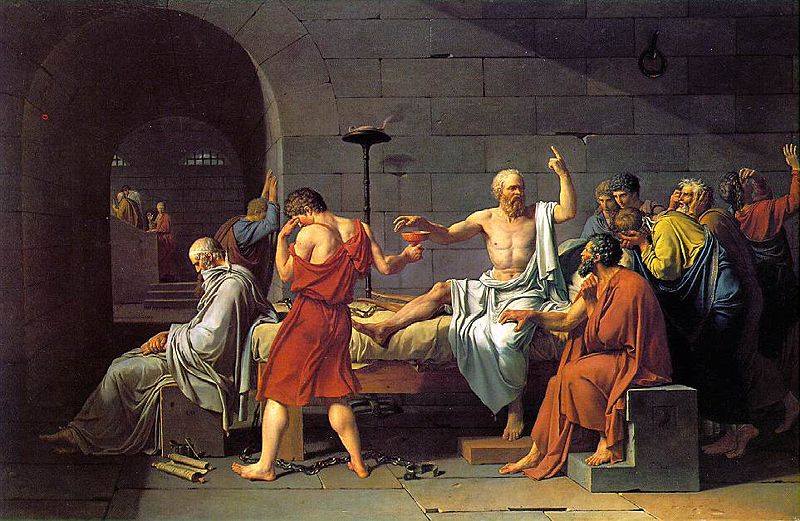
"All Along the Watchtower" has been feted as one of the greatest songs of all time, and as much as I think that reputation comes from Hendrix's definitive reading, I would say that just as much credit comes from those lyrics and the sense of mystery that inhabits those words. The vast majority of art is very clear-cut at its core; you think of a classic film like The Maltese Falcon, a great song like "God Only Knows", or a brilliant painting like Jacques-Louis David's The Death of Socrates, and you can understand where they're coming from and what they're trying to get you to think or feel. But then you have something that doesn't push your buttons in that way, something that defies our traditional understanding of artwork, and it causes us to scratch our heads and go digging in our local libraries (or, ahem, Google) to help us reach that level of understanding. Dylan's catalog is full of songs that stand just beyond the reach of easy comprehension - I've been lucky enough to write posts about them that people have enjoyed reading - but rarely has he written a song in that vein that's so simple, so pared down and seemingly common in language and form, that still manages to frustrate us like the mythical word on the tip of our tongues. And it doesn't matter if those words are sung over a gentle acoustic backing, over heavy electric firepower, or with a classical backing - they still confound us, and beckon us to come and listen one more time, so that we might be able to understand. Read more!
Tuesday, June 2, 2009
Bob Dylan Song #105: I Dreamed I Saw St. Augustine
Before we delve into some deeper stuff in this post, a few words should be said about the musical arrangement of "I Dreamed I Saw St. Augustine". To me, the arrangement is one of the best showcases for Dylan's harmonica on the album; he doesn't do too much outside mirror the chords for the song, but he manages to pack a great deal of emotion and power into those solos, holding notes perfectly and acting as counterpoint to his disciplined, straightforward vocal performance on the track. Add to that the gentle tempo the band takes, along with the now-familiar sparse backup (you know it's stripped-down when the rhythm guitar - an acoustic rhythm guitar, no less - gets a lot of play in the song's mix), and you have the perfect backing for the lyrics to this tune.
Much has been made about how much influence the Bible had in terms of the lyrics on John Wesley Harding (which is not to say Dylan didn't incorporate some religious imagery in his previous songs - it's just more overt here), and "I Dreamed I Saw St. Augustine" is the first song in the album order that makes that influence felt. St. Augustine (for those that don't know, including myself before preparing this post) was a Catholic bishop renowned for his contributions to Christian theology and philosophy. He wasn't actually put to death, for the record, although he passed away as his city was being overrun by Vandals. One wonders why it was Augustine who was chosen as the saint mentioned in the song - if you wanted to choose an actual martyr, you certainly have your pick of the litter in that regard. Maybe it was just because "Augustine" rolls off the tongue particularly well in the context of the music Dylan wrote, who knows.
Or who knows, maybe Augustine held something for Dylan at that particular juncture of his life. It's worth mentioning time and again that the Dylan that recorded John Wesley Harding was a man very much at a crossroads in his life; I've made previous mention of his anecdote about staring out into the sky one night and saying to himself "something's gotta change". Augustine, as he wrote about in his famous Confessions, did not come into Christianity at an early age; rather, he was converted at about 30 years of age, after a self-professed lifetime of sin and vice. He talks about how the death of one of his friends caused him to hate many of the things he used to love, because they reminded him of what he had lost. This leads to the realization that it is only the love of earthly things that can cause such a feeling of loss, whereas the love of God never leaves you wanting in that way. Dylan, one can assume, didn't quite feel that way about things (at least, not until '78 or so), but he could definitely identify with a lot of what Augustine was saying about traumatic events rendering what you once loved into something that gives you great pain. Sure, Dylan kept jamming with the Band, but one can only assume he couldn't look at pills or think about hotel rooms in 1967 without a little shudder passing through him. For a man still in a state of flux, Augustine's message had to have a great deal of resonance.
Augustine's Confessions also relates stories about a young Augustine stealing pears, a needless venture when Augustine could very easily get better pears as part of a well-to-do family, and the feeling he had while doing so. The future saint gives a textbook case of group mentality, as he says that he probably wouldn't have had the urge to steal without being in the company of people who would share in the stealing and alleviate him of some of his guilt. That feeling of groupthink ties in beautifully to one of the messages to "I Dreamed I Saw St. Augustine", the idea of the pain of doing something that causes you grief because other people are doing it ("I dreamed I was amongst the ones/who put him out to death...And bowed my head and cried"). For hundreds of years people have thought and written about group psychology, where something a single person couldn't possibly forgive can easily be committed by a group of people, and the worst things about us are easily dispersed amongst many. Without being much of a psychologist, I'd say that one of the appealing factors of this phenomenon is the idea of deindividualization - we all talk about being our own person and standing out and all that, but we also know that it's goddamn hard to do that, to be a lone voice in a crowd, and to stand up and say "this is bullshit" when need be. We are human, after all; this doesn't forgive us for looking the other way, but the legitimate struggle of human existence can explain why we look the other way. To quote Samuel Johnson (and, by proxy, Fear and Loathing in Las Vegas), "He who makes a beast of himself gets rid of the pain of being a man." It's a lot easier to do this in the company of others.
That quote by Dr. Johnson, it should be mentioned, has to do with what overindulgence in drink can do to you (small wonder it makes sense as epigraph to Fear and Loathing, a book more or less entirely devoted to the "joys" of substance abuse). And I can't help but think about Bob Dylan in 1965-1966, continually blasted out of his mind, playing crazy music that people booed the hell out of him for, withdrawing further and further into himself to the point that he almost certainly would have died if the motorcycle crash hadn't changed things forever. I wrote before about how Dylan was all alone on these tours; I didn't mean in the literal sense, of course, but more in the sense that none of his other companions was encountering the same massive wave of publicity, scrutiny, and pressure that Dylan faced in those years. And in that situation, he basically had two choices in dealing with this wave - he could sit in his room by himself and internalize all that pain, or he could hang with his boys, turnontuneindropout, and allow sweet pharmaceuticals to wash the pain away. It's not hard to see why Dylan made the choice that he did. And it turned him into an asshole at times, to be sure, but even that was okay - hey, it's just the drugs, right? Dylan chose to become as much of a beast as he could, and it made all the pain of the rest of his waking life all the easier to bear.
Read more!